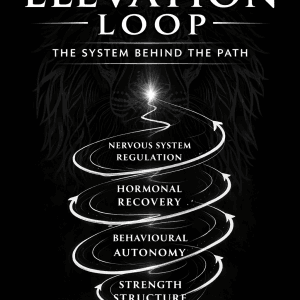



Why quiet discipline rebuilds what chaos once eroded
Elevation is not about chasing more.
It’s about becoming steady again.
For someone coming out of addiction, that distinction matters.
Where addiction was intensity, Elevation is rhythm.
Where addiction was escape, Elevation is presence.
Where addiction hijacked the body, Elevation returns it to you.
Quiet Discipline: Structure Without Punishment
One of the greatest risks after addiction is unstructured freedom.
Too much choice.
Too much space.
Too little rhythm.
Elevation offers something deeply stabilising:
A lifestyle of quiet discipline.
Not punishment.
Not obsession.
Not extremes.
Just:
- Regular training
- Regular sleep
- Regular nourishment
- Regular movement
- Regular self-respect
For someone who once relied on substances to regulate emotion, this kind of structure becomes a new container — one that supports rather than controls.
Discipline here is not about willpower.
It’s about reducing chaos.
Resistance Training as Meditation
Elevation places resistance training at its core — not for aesthetics, but for regulation.
Lifting weights does something few practices can:
- It anchors attention in the body
- It quiets mental noise
- It creates immediate feedback
- It rewards patience and consistency
- It teaches effort without urgency
Each repetition becomes a moment of presence.
Breath.
Tension.
Release.
Repeat.
This is why I once wrote about Serenity in Motion: The Calm That Comes With The Rhythm Of Reps
Because when done properly, resistance training becomes:
- Moving meditation
- Embodied focus
- Nervous system training
- Confidence without ego
You don’t escape your thoughts.
They simply lose their grip.
Training the Body Trains the Mind
Addiction disconnects people from their bodies.
Elevation reverses that.
As physical strength returns:
- Self-trust returns
- Confidence becomes embodied
- Posture changes
- Decision-making steadies
- Emotional tolerance improves
This isn’t mindset work.
It’s physiology informing psychology.
A regulated body produces a calmer mind.
Not the other way around.
Supplementation as Support, Not Substitution
Elevation treats supplementation carefully and responsibly.
Not as:
- Shortcuts
- Replacements
- Escapes
But as support. After addiction, the body is often depleted and dysregulated.
Targeted supplementation can help with:
- Calming the nervous system
- Improving sleep quality
- Stabilising mood
- Reducing cravings
- Supporting recovery and repair
Used correctly, supplements don’t replace discipline — they make discipline sustainable.
The goal is not stimulation.
The goal is regulation.
Why This Lifestyle Works for People in Recovery
Elevation works because it offers:
- Structure without rigidity
- Effort without chaos
- Progress without pressure
- Calm without numbness
- Strength without aggression
It gives former addicts something crucial:
A way to live that feels steady, purposeful and quietly rewarding.
Not thrilling.
Not dramatic.
Just solid.
From Recovery to Capacity
Empowerment says:
“Don’t destroy yourself.”
Elevation says:
“Now build something you want to protect.”
That shift matters. When life contains:
- Rhythm
- Strength
- Sleep
- Calm
- Presence
- Discipline
Relapse loses its appeal — not because it’s forbidden, but because it no longer fits.
A Closing Note
Elevation isn’t for everyone. And it doesn’t need to be. But for those who are ready:
- To rebuild the body
- To live with rhythm
- To replace chaos with calm
- To feel strong without force
Elevation offers a path that is:
- Grounded
- Sustainable
- Respectful of recovery
- And quietly transformative
No rush.
No hype.
Just the work — done well.
DAVID